We help Shopify brands turn attention into measurable growth

10 Common Shopify Revenue Opportunities We See in 2026
Why successful Shopify stores plateau despite steady traffic, and what to address first before scaling.
1/11/20265 min read


1. Slow product pages quietly reducing conversions:
Most Shopify stores don't struggle because of traffic.
They struggle because revenue opportunities are missed at multiple points in the buying journey.These missed opportunities add up over time and become more expensive as brands scale ads, add tools, and increase complexity.
Below are the most common Shopify revenue opportunity we see repeatedly in 2026 when reviewing stores during a Shopify Revenue Diagnostic.
This is not a list of tips or tools. It is a pattern-based overview of what breaks most often and why.
Many Shopify stores miss conversion opportunities because product pages load too slowly.
This is rarely caused by a single issue. It is usually the result of accumulated decisions over time including heavy images, unused apps, and theme complexity.
The impact is silent. Visitors abandon before engaging, and the store owner often assumes traffic quality is the problem.
This is typically identified and prioritized during a revenue diagnostic because speed issues rarely exist in isolation.


2. Missing trust signals at the point of decision:
When customers hesitate, it is rarely because they dislike the product. It is because something feels uncertain.
We consistently see stores where reviews, guarantees, delivery expectations, or social proof are present but poorly positioned or fragmented across the site.
Trust signals must appear at the exact moment a customer is deciding. When they do not, hesitation increases and conversions drop.
This is a common revenue opportunity we identify during diagnostics because it affects both conversion rate and paid traffic efficiency.
3. Checkout friction compounding at scale:
Checkout is where intent turns into revenue. It's also where most Shopify stores lose the highest percentage of buyers.
Complex checkout flows, unnecessary fields, limited payment options, and unclear delivery expectations introduce friction that adds up quickly.
As traffic increases, these issues become more costly. Brands often attempt to scale ads without realizing checkout is the constraint.
Checkout friction is one of the first areas evaluated during a Shopify Revenue Diagnostic because it has an outsized impact on revenue per visitor.


4. Product pages explaining features instead of outcomes:
Many Shopify product pages describe what a product is instead of what it does for the customer.
Features matter, but only after the outcome is clear. When pages fail to communicate transformation, customers hesitate or continue browsing.
This leads to lower add-to-cart rates even when traffic quality is strong.
We frequently identify this issue during diagnostics because it affects both organic and paid traffic performance.

5. Exit without follow-up:
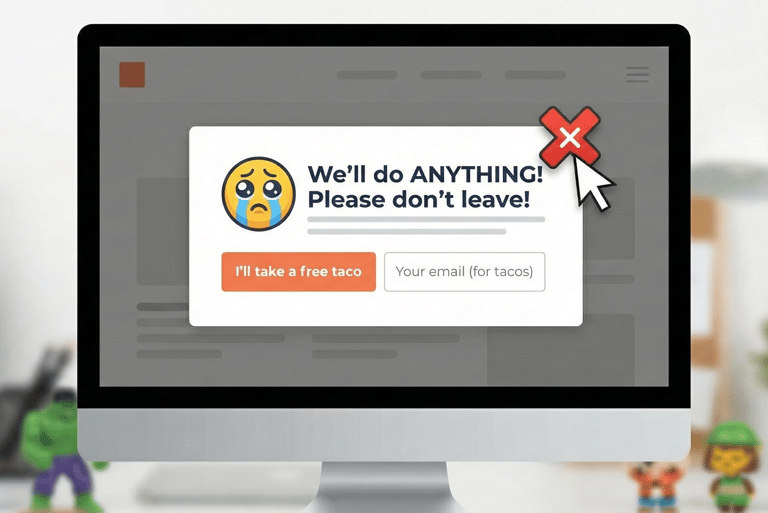
A large percentage of visitors will not buy on their first visit. This is normal.
The problem occurs when stores fail to capture intent or follow up effectively. When visitors leave without entering an email flow or recovery system, valuable revenue opportunities are lost.
This is one of the most common revenue leaks we see and one of the easiest to underestimate.
Email capture and follow up gaps are always reviewed during diagnostics because they affect both short-term recovery and long-term lifetime value.


6. Product pages without demonstration:
When customers cannot clearly see how a product works or what to expect, uncertainty increases.
We frequently see stores relying solely on static images when short demonstration content would significantly improve clarity and confidence.
This does not require complex production. It requires intentional placement and purpose.
This issue is often uncovered during diagnostics because it connects directly to hesitation and drop-off behavior.


7. Mobile experience treated as a secondary concern:
Most Shopify traffic is mobile. Many stores are still designed primarily for desktop behavior.
Small tap targets, buried calls to action, slow mobile load times, and poor image interaction reduce conversion quietly.
Mobile experience issues compound quickly as traffic scales and are often misattributed to audience quality.
This is a standard diagnostic review area because mobile friction impacts the majority of visitors.


8. Artificial urgency that reduces trust:
Urgency can increase conversion when it reflects reality. It damages trust when it does not.
We frequently see stores using urgency mechanisms that feel forced, repetitive, or inconsistent. This creates skepticism rather than momentum.
Ethical urgency aligns with inventory reality, time-bound offers, or genuine constraints.
This pattern is evaluated during diagnostics because urgency impacts both conversion rate and brand perception.


9. Navigation that forces customers to think too hard:
If customers cannot quickly find what they are looking for, they will leave.
Complex menus, unclear collections, and poorly structured navigation create friction that is often invisible in analytics.
Navigation issues are a common revenue leak because they reduce product discovery and engagement.
This is typically mapped during diagnostics by reviewing user paths and behavior patterns.


10. Email systems underperforming their potential:
Many Shopify stores have email flows in place, but they aren't aligned to customer behavior or revenue goals.
Underperforming email systems leave significant lifetime value unrealized and weaken overall growth efficiency.
Email performance is never evaluated in isolation during diagnostics. It is reviewed as part of the full revenue system.
As Shopify brands scale, complexity increases. More apps, more traffic sources, more moving parts. Over time, this makes it harder to see where revenue opportunities are being missed.
Most of the issues covered in this article aren't dramatic on their own. The problem is that they compound together and quietly cap growth. Adding more traffic or tools without fixing these fundamentals usually leads to diminishing returns.
The goal is not to fix everything at once. It is to identify which issue has the highest impact right now and focus there first.
That's the purpose of our Shopify revenue diagnostic. We help brands identify their primary constraint, understand the financial impact, and create a prioritized plan for the next phase of growth.
If your store feels harder to scale than it should, clarity is the best place to start.
Career & Employment Verification Inquiries
© 2026. All rights reserved.


Phone